



بصمة التفكير الشامل (HTF).. الثورة القادمة في إدارة الجودة



مقدمة بقلم: عثمان الشويخ
في إطار البحث الدائم عن الأفكار الجديدة خارج الصندوق، وفي ظل سعينا المستمر لتطوير مؤسساتنا الوطنية لتواكب الرؤى العالمية، نتابع اليوم طرحاً علمياً استثنائياً يربط بين "جوهر الإنسان" وبين "دقة الآلة".
إننا أمام رؤية لا تكتفي بتحسين المنتج، بل تعيد صياغة "عقلية الصانع".
يسعدني أن أقدم للقارئ العربي هذا النموذج المبتكر الذي صاغه المهندس هيثم المسلمي، والذي نرى فيه لبنة أساسية في بناء مستقبل الصناعة وفق رؤية مصر 2030، حيث يصبح العقل هو خط الإنتاج الحقيقي، وتتحول الجودة من مجرد "إجراءات" إلى "بصمة تفكير" متأصلة.
حين يصبح العقل هو خط الإنتاج الحقيقي: بصمة التفكير الشامل كنظرية تعيد اختراع الجودة من داخل الإنسان
إعداد: المهندس هيثم محمد عبد الغني المسلمي
مهندس جودة – قطاع الصناعات الغذائية – مصر
الملخص
في ظل التطور المتسارع في مفاهيم إدارة الجودة الشاملة، لم يعد التركيز على العمليات والإجراءات كافيًا لتحقيق التميز المؤسسي المستدام. إذ تشير التجارب الحديثة إلى أن جذور الجودة لا تكمن في الأنظمة، بل في أنماط التفكير البشري التي تُنتج هذه الأنظمة.
تقدم هذه الدراسة إطارًا علمياً جديداً تحت مسمى "بصمة التفكير الشامل"، والذي يُعرَّف بأنه الأثر التراكمي لأنماط التفكير الإدراكي والعاطفي والسلوكي والابتكاري داخل المؤسسات، وتأثيره المباشر على جودة الأداء. وتقترح الدراسة نموذجاً تحليلياً قابلاً للقياس يربط بين التفكير الإنساني ومخرجات الجودة، بما يفتح المجال أمام تحول جذري من "إدارة العمليات" إلى "إدارة التفكير".
1. المقدمة
تواجه المؤسسات الحديثة تحدياً جوهرياً يتمثل في تحقيق جودة مستدامة في بيئات معقدة وسريعة التغير. ورغم تطور أدوات الجودة، لا تزال العديد من المنظمات تعاني من فجوة بين التخطيط والتنفيذ. تكمن الإشكالية في أن معظم نماذج الجودة التقليدية تتعامل مع الإنسان كعنصر تنفيذي، بينما تتجاهل أن الإنسان هو مصدر القرار والسلوك والانحراف. من هنا تنطلق هذه الدراسة لتقديم رؤية جديدة: "الجودة هي انعكاس مباشر لبنية التفكير الإنساني داخل المؤسسة".
2. الإطار المفاهيمي
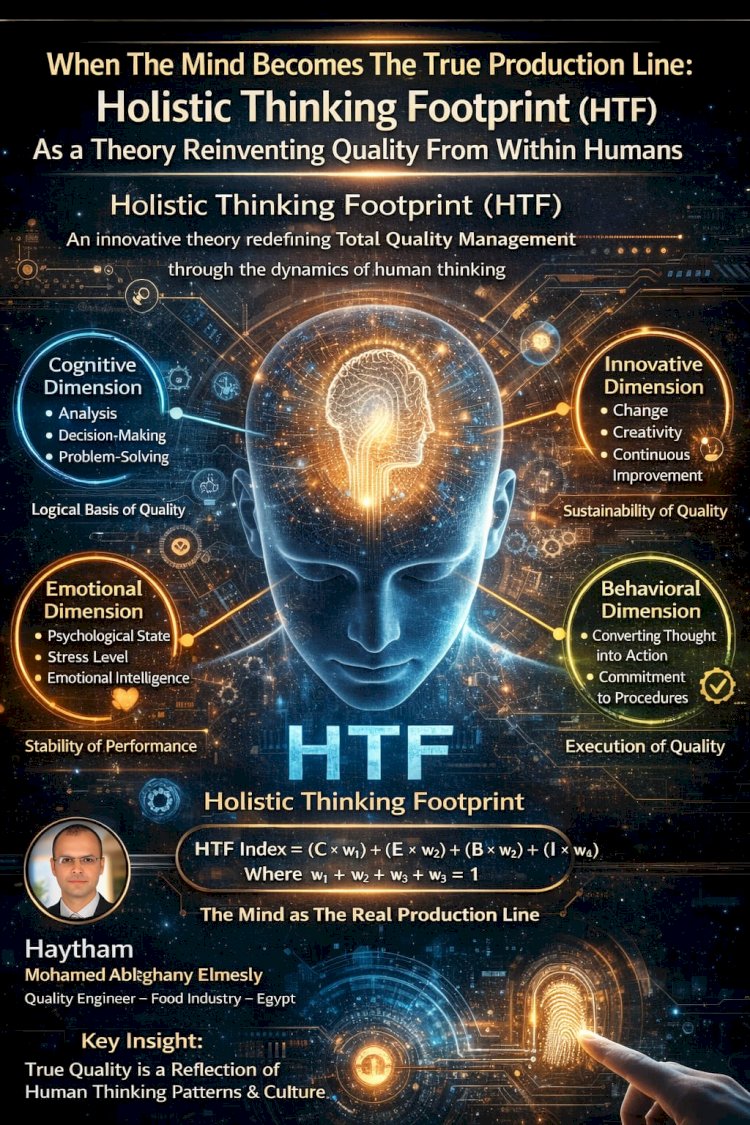
تعريف بصمة التفكير الشامل:
هي مؤشر تراكمي يعكس جودة أنماط التفكير داخل النظام المؤسسي وتأثيرها على الأداء والابتكار والاستدامة.
أبعاد النموذج:
التفكير الإدراكي: يركز على تحليل المعلومات، اتخاذ القرار، وفهم المشكلات. (يمثل الأساس المنطقي للجودة).
التفكير العاطفي: يركز على الحالة النفسية، مستوى الضغط، والذكاء العاطفي. (يمثل استقرار الأداء).
التفكير السلوكي: يركز على تحويل الفكر إلى سلوك، الالتزام بالإجراءات، والانضباط التشغيلي. (يمثل تنفيذ الجودة).
التفكير الابتكاري: يركز على التغيير، الإبداع، والتحسين المستمر. (يمثل استدامة الجودة).
3. النموذج الرياضي المقترح
لتفعيل النظرية، تقترح الدراسة معادلة حسابية لقياس مؤشر بصمة التفكير الشامل، حيث يتم دمج مؤشرات التفكير الأربعة (الإدراكي، العاطفي، السلوكي، والابتكاري) وفق أوزان نسبية قابلة للتعديل حسب طبيعة كل مؤسسة، مما يحول "طريقة التفكير" إلى رقم يمكن قياسه وتقييمه.
4. التكامل مع الجودة الشاملة
يعيد هذا النموذج تعريف الإدارة من خلال التحول في الأبعاد التالية:
من إدارة العمليات إلى إدارة التفكير.
من ضبط الجودة إلى تشكيل الإدراك.
من تقليل الأخطاء إلى إعادة برمجة السلوك.
5. التطبيق العملي
في قطاع الصناعات الغذائية (مثل المطاحن):
بدلاً من التركيز فقط على جودة المنتج النهائي ونسب الفاقد، يتم تحليل نمط تفكير العامل، مستوى الضغط النفسي، وثقافة الجودة لديه. والنتيجة هي تحول جذري من "تصحيح الأخطاء" إلى "منع حدوثها من الأصل".
6. القيمة الابتكارية
تتمثل قوة النموذج في تحويل التفكير إلى مؤشر قابل للقياس، ودمج علم النفس مع الجودة الصناعية، مما يمهد الطريق نحو "ذكاء جودة تنبؤي".
7. الامتداد المستقبلي
يمكن تطوير هذه البصمة لتتكامل مع نماذج متطورة مثل "البصمة الكربونية النفسية" وإنشاء "التوأم النفسي للجودة" كنظام تنبؤي يحمي المؤسسات من المخاطر قبل وقوعها.
الخاتمة
تؤكد هذه الدراسة أن الجودة ليست نتيجة فقط، بل هي انعكاس مباشر لطبيعة التفكير الإنساني. وبالتالي، فإن أي تحول حقيقي في الأداء المؤسسي يجب أن يبدأ من إعادة هندسة التفكير قبل إعادة هندسة العمليات.
أهمية النظرية لمصر ورؤية 2030
تمثل نظرية بصمة التفكير الشامل قيمة كبيرة للدولة المصرية لأنها تربط الجودة بالإنسان. وتساعد النظرية على رفع كفاءة المؤسسات، وتقليل الهدر، وتحسين جودة الكادر البشري. كما تدعم رؤية مصر 2030 عبر التركيز على بناء الإنسان وزيادة الإنتاجية. وفي قطاع حيوي كقطاع المطاحن والصناعات الغذائية، تساهم النظرية في تحسين ثقافة الجودة وخفض الفاقد ورفع الروح المعنوية للعاملين، مما ينعكس إيجاباً على الأمن الغذائي والاقتصاد الوطني.
للإطلاع على النسخة الإنجليزية من المقال (English Version):
(يمكن للقارئ مراجعة المصطلحات العلمية والنسخة الأجنبية أدناه)
Holistic Thinking Footprint (HTF): An Innovative Scientific Framework for Redefining Total Quality Management Through Human Thinking Dynamics.
Prepared by: Eng. Haysam Mohamed Abdel Ghani Al Musallami.
(Abstract)
In light of the rapid evolution of Total Quality Management concepts, focusing solely on processes and procedures is no longer sufficient
Abstract
In light of the rapid evolution of Total Quality Management concepts, focusing solely on processes and procedures is no longer sufficient to achieve sustainable organizational excellence. Modern experiences indicate that the roots of quality do not lie in systems themselves, but rather in the patterns of human thinking that create these systems.
This study introduces a new scientific framework called the “Holistic Thinking Footprint (HTF),” defined as the cumulative effect of cognitive, emotional, behavioral, and innovative thinking patterns within organizations, and their direct impact on performance quality.
The study proposes a measurable analytical model linking human thinking to quality outcomes, opening the door to a radical transformation from “process management” to “thinking management.”
1. Introduction
Modern organizations face a fundamental challenge in achieving sustainable quality within complex and rapidly changing environments. Despite the development of quality tools, many organizations still suffer from a gap between planning and execution.
The problem lies in the fact that most traditional quality models treat people as merely operational elements, while ignoring that human beings are the true source of decisions, behaviors, and deviations.
From this perspective, the study introduces a new vision:
Quality is a direct reflection of the structure of human thinking within the organization.
2. Conceptual Framework
Definition of the Holistic Thinking Footprint (HTF)
It is: “A cumulative indicator that reflects the quality of thinking patterns within the institutional system and their impact on performance, innovation, and sustainability.”
Dimensions of the Model
Cognitive Dimension
Focuses on: information analysis, decision-making, and problem understanding.
Represents the rational foundation of quality.
Emotional Dimension
Focuses on: psychological state, stress levels, and emotional intelligence.
Represents performance stability.
Behavioral Dimension
Focuses on: transforming thought into behavior, adherence to procedures, and operational discipline.
Represents the execution of quality.
Innovative Dimension
Focuses on: change, creativity, and continuous improvement.
Represents the sustainability of quality.
3. Proposed Mathematical Model
To activate the theory, the study proposes the following equation:
HTF\ Index = (C \times w_1) + (E \times w_2) + (B \times w_3) + (I \times w_4)
Where:
C = Cognitive Thinking Index
E = Emotional Thinking Index
B = Behavioral Thinking Index
I = Innovative Thinking Index
w = Relative weights adjustable according to the nature of the organization
In the standard case:
w_1 = w_2 = w_3 = w_4 = 0.25
4. Integration with Total Quality Management
Traditional Dimension
New Dimension
Process Management
Thinking Management
Quality Control
Perception Shaping
Error Reduction
Behavior Reprogramming
5. Practical Application (Case Insight)
In the food industries sector, such as flour mills, instead of focusing only on:
Flour quality
Waste ratios
The analysis would also include:
✔ Worker thinking patterns
✔ Psychological stress levels
✔ Quality culture
Result:
A radical transformation from correcting errors after they occur to preventing them from happening in the first place.
6. Innovation Value
The brilliance of the model lies in:
Transforming thinking into a measurable indicator
Integrating psychology with industrial quality
Paving the way toward predictive quality intelligence
7. Future Vision
HTF can be further developed into:
Integration with the Psychological Carbon Footprint (PCF) model
Establishing the Psychological Digital Twin for Quality (PDT-Q) as a predictive system
Conclusion
This study confirms that:
Quality is not merely an outcome… it is a direct reflection of the nature of human thinking.
Therefore, any real transformation in organizational performance must begin wi Re-engineering thinking before re-engineering processes.
The Holistic Thinking Footprint (HTF) theory represents significant value for Egypt because it connects quality to the way people think inside organizations, not only to procedures and regulations. The theory helps improve institutional efficiency, reduce waste and losses, and enhance human quality by developing cognitive thinking, psychological stability, positive behavior, and innovation.
It also supports Egypt Vision 2030 by focusing on human development, increasing productivity, improving institutional efficiency, and achieving sustainability.
In the food industries sector, especially within North Cairo Mills Company, the theory can contribute to improving quality culture, reducing waste, minimizing operational errors, and raising employee morale.
HTF also paves the way for developing more advanced tools such as the Psychological Carbon Footprint (PCF), the Psychological Digital Twin for Quality (PDT-Q), and Quality Risk Indicators.
The importance of the theory lies in its ability to move organizations from the stage of correcting errors after they occur to the stage of preventing them from happening in the first place through re-engineering human thinking within the work environment.